Portugal Golden Visa 2026 — What Still Qualifies, What Doesn't, and Whether It Makes Sense for Americans

Portugal's Golden Visa removed direct residential property investment as a qualifying route in October 2023. Americans can no longer obtain a Golden Visa by purchasing a villa in the Algarve. What remains in 2026: a €500,000 qualifying fund investment, job creation, capital transfer, and cultural heritage donation. The Golden Visa still leads to Portuguese citizenship in five years — but for most Americans who want to live in Portugal, the D7 Passive Income Visa is a more accessible and far less capital-intensive pathway. The Golden Visa makes sense for Americans who want an EU residency permit and eventual EU passport while spending as few as 7 days per year in Portugal.
What Changed in 2023 — and Why It Matters
For the better part of a decade, Portugal's Golden Visa was the most straightforward path to EU residency for high-net-worth Americans willing to deploy capital in Portuguese real estate. The structure was simple: buy a qualifying residential property at or above the applicable threshold, hold it, spend a minimum of seven days per year in Portugal, and after five years become eligible for citizenship. Tens of thousands of non-EU nationals — including a significant number of Americans — used this route.
In October 2023, that route closed. The Mais Habitação legislation, passed in response to mounting political pressure around housing affordability in Portugal's urban centres, removed direct residential real estate investment from the list of qualifying Golden Visa activities. New applications based on property purchase were no longer accepted from that point. Existing Golden Visa holders who qualified through property investment retain their status — they are grandfathered and their path to citizenship is unaffected. For anyone applying today, the property route simply does not exist.
Much of the content currently ranking online about Portugal's Golden Visa was written before October 2023 or has not been updated to reflect the change. This creates genuine confusion for American buyers who find an Algarve property they want to buy and assume — incorrectly — that the purchase can anchor their EU residency application. It cannot.
| Route | Minimum Amount | Conditions | Practical Relevance for Americans |
|---|---|---|---|
| Qualifying fund investment | €500,000 | Portuguese-registered and domiciled fund; primarily non-residential sectors; 5-year minimum lock-up | Most commonly used route by American investors in 2026; range of funds available across private equity, venture, and infrastructure |
| Capital transfer | €1,500,000 | Transfer of €1.5M into Portugal — bank deposit or qualifying financial instrument | High threshold; rarely used; no investment return structure |
| Job creation | 10 permanent jobs | Must create and maintain 10 permanent positions for Portuguese nationals; or 8 jobs in a low-density area plus qualifying investment | Relevant for Americans opening a business in Portugal; not applicable to passive investors or retirees |
| Scientific research | €500,000 | Investment in R&D activities in Portugal through a qualifying research institution | Niche; requires specific institutional relationships |
| Cultural heritage donation | €250,000 | Donation to approved Portuguese cultural heritage or artistic production entity | Lowest threshold but provides no financial return; niche use case |
| Residential property — REMOVED | N/A | Removed October 2023 under Mais Habitação legislation | No longer available for new applicants under any circumstances |
Routes sourced from AIMA (Agência para a Integração, Migrações e Asilo) and Portuguese government guidance as of August 2026. Conditions and thresholds are subject to legislative change — verify current requirements with a qualified Portuguese immigration attorney before applying. Source: AMA — Agência para a Modernização Administrativa.
The Fund Route — How It Works in Practice
For American investors considering the Golden Visa in 2026, the fund route is by far the most commonly used pathway. The mechanics: invest a minimum of €500,000 in a qualifying Portuguese investment fund — one that is registered and domiciled in Portugal, regulated by the CMVM (Portugal's securities regulator), and investing primarily in sectors other than residential real estate or in commercial real estate. The investment must be maintained for a minimum of five years.
The Portuguese fund market has grown substantially since 2018 specifically to serve Golden Visa investors. Available fund types include:
- Private equity funds targeting Portuguese SMEs — mid-risk, illiquid for the lock-up period, returns vary widely by fund
- Venture capital funds focused on Portuguese technology and innovation companies — higher risk, longer time to return, attractive to investors who want exposure to the Portuguese startup ecosystem
- Infrastructure and renewable energy funds — lower risk profile, more predictable income during the lock-up, qualifying for Golden Visa purposes
- Commercial real estate funds — qualifying because they invest in commercial rather than residential assets; more familiar structure for real estate-oriented investors
The fund investment is not simply a payment into a government programme — it is a genuine investment with an expected return, fees, and market risk. Due diligence on the fund itself — its track record, management team, fee structure, and liquidity terms at the end of the lock-up — is as important as the immigration analysis. American investors should engage a financial advisor with specific Portuguese fund experience alongside their immigration attorney.
Golden Visa vs. D7 — The Decision Framework
| Factor | Golden Visa (Fund Route) | D7 Passive Income Visa |
|---|---|---|
| Capital required | €500,000 minimum fund investment | None — income demonstration only |
| Income required | None specified | €870/month per main applicant |
| Minimum presence in Portugal | 7 days per year (year 1); 14 days per 2-year renewal | 183 days per year |
| Primary lifestyle implication | Maintain US primary life; visit Portugal briefly each year | Live primarily in Portugal; genuine residency |
| Path to citizenship | 5 years maintaining investment and presence | 5 years maintaining residency and presence |
| Application process | AIMA in Portugal after fund investment confirmed | Consulate in US → AIMA in Portugal |
| Portuguese tax residency triggered | No — 7 days does not establish tax residency | Yes — 183 days establishes Portuguese tax residency |
| IFICI / NHR tax regime access | Not automatically — requires separate tax residency establishment | Yes — D7 holders who establish tax residency can apply |
| Right to work in Portugal | Yes | Yes |
| Right to live anywhere in Schengen | Yes — with residence permit | Yes — with residence permit |
The 7-Day Presence Advantage — Who It Actually Serves
The Golden Visa's minimum presence requirement — seven days in Portugal per year during the initial period — is its defining structural advantage over the D7. For Americans whose primary life, family, business, and social network remains in the United States, the D7's 183-day requirement is genuinely prohibitive. The Golden Visa allows them to obtain and maintain Portuguese residency — and eventually citizenship eligibility — while living essentially full-time in the US.
The buyer profiles for whom this matters most:
- Americans still in active careers who cannot commit to six months per year abroad but want EU optionality secured now while they can deploy the capital
- Americans with aging parents or family obligations that prevent extended foreign residency in the near term
- Americans who want an EU passport as a long-term hedge — against political volatility, against future visa restrictions, or simply as an asset — without changing their primary lifestyle
- High-net-worth investors for whom €500,000 in a Portuguese fund is a portfolio allocation decision rather than a life-savings commitment, and who value the optionality of EU residency without the lifestyle constraint of 183 days
For Americans in any of these profiles, the Golden Visa remains a legitimate and well-structured programme in 2026. For Americans who genuinely want to live in Portugal — retire to the Algarve, work remotely from Lagos or Tavira — the D7 is the right answer, and the D7 is dramatically more accessible.
Golden Visa or D7 — Not Sure Which Fits?
Peter can connect you with experienced Portuguese immigration attorneys who handle both programmes for American clients. No cost to buyers.
The Important Tax Point — Golden Visa Does Not Trigger Portuguese Tax Residency
This is the most consistently misunderstood aspect of the Golden Visa for American investors. Spending seven days per year in Portugal does not make you a Portuguese tax resident. Portuguese tax residency is established by spending 183 or more days in Portugal in a calendar year, or by having your primary habitual residence in Portugal. A Golden Visa holder who visits Portugal for seven days per year remains a US tax resident only — their Portuguese tax obligations are limited to income sourced in Portugal (such as returns from the qualifying fund investment).
This has two implications. First, Golden Visa holders do not automatically access the IFICI regime — the flat 20% rate on qualifying Portuguese-sourced income for new tax residents. Accessing IFICI requires establishing Portuguese tax residency, which requires 183 days of presence. Second, Golden Visa holders who subsequently decide they do want to establish Portuguese tax residency — after retirement, for example — can do so by increasing their time in Portugal, at which point IFICI access becomes available if their income profile qualifies. The Golden Visa does not foreclose that option; it simply does not open it automatically.
American Golden Visa holders continue to file US federal tax returns on worldwide income regardless of their Portuguese residency status. The fund investment itself — returns, dividends, and eventual capital gains — must be reported on the US return. A US-Portugal dual-filing tax professional is required. See the NHR / IFICI Tax Guide for Americans for the full picture.
Can You Buy Algarve Property and Get the Golden Visa?
Not through the property purchase itself — not anymore. But the two decisions are not mutually exclusive. An American can invest €500,000 in a qualifying fund to obtain the Golden Visa, and separately purchase an Algarve property as a lifestyle and investment decision. These are two distinct transactions with two distinct purposes. The fund investment anchors the residency application; the property purchase is a separate financial and lifestyle decision that has no bearing on the residency status.
This combination — Golden Visa through the fund route, plus a separate Algarve property purchase — is used by a subset of American buyers who want both EU residency optionality and a physical presence in Portugal. The total capital commitment is higher than either decision alone, but the outcomes serve different objectives: the fund investment buys the EU residency pathway; the property purchase buys the lifestyle asset and potential rental income.
The Citizenship Timeline — Five Years From When?
A common source of confusion: the five-year citizenship clock starts from the date the Golden Visa residence permit is issued, not from the date of the qualifying investment. The qualifying fund investment must be made before the AIMA application, but the five-year period is measured from when AIMA approves and issues the residence permit — typically three to six months after the application is submitted.
The citizenship application itself, once eligible at five years, is processed through the Portuguese civil registry (Conservatória dos Registos Centrais). Processing time has historically been 12–24 months after submission. The total timeline from fund investment to Portuguese passport: approximately seven to eight years in the current processing environment.
Questions About the Golden Visa or D7 for the Algarve?
Peter reviews every inquiry personally and responds within 48 hours.
Frequently Asked Questions
Can Americans still get Portugal's Golden Visa through property investment?
No. Portugal removed residential property investment as a qualifying Golden Visa route in October 2023. New applicants cannot obtain a Golden Visa by purchasing property anywhere in Portugal. The routes available in 2026 are the €500,000 qualifying fund investment, capital transfer (€1.5M), job creation (10 permanent positions), scientific research investment (€500K), and cultural heritage donation (€250K).
What is the Portugal Golden Visa fund route?
A minimum €500,000 investment in a qualifying Portuguese investment fund — registered and domiciled in Portugal, regulated by the CMVM, investing primarily in non-residential sectors, with a 5-year minimum lock-up. Fund types include private equity, venture capital, infrastructure, and commercial real estate funds. Due diligence on the fund itself — track record, fees, management, liquidity terms — is as important as the immigration analysis.
What is the difference between the Golden Visa and D7 for Americans?
The Golden Visa requires €500,000 capital deployment and only 7 days per year presence. The D7 requires €870/month in passive income and 183 days per year. For Americans who want to live in Portugal, the D7 is the right answer. For Americans who want EU residency optionality while maintaining a primary life in the US, the Golden Visa's 7-day minimum is its decisive advantage.
Does the Golden Visa trigger Portuguese tax residency?
No. Spending 7 days per year in Portugal does not establish Portuguese tax residency. Golden Visa holders who visit for the minimum period remain US tax residents, file US returns on worldwide income, and do not automatically access the IFICI regime. Portuguese tax residency requires 183 days per year or primary habitual residence in Portugal.
Does Portugal's Golden Visa lead to citizenship?
Yes. After 5 years of maintaining the qualifying investment and meeting minimum presence requirements, Golden Visa holders become eligible to apply for Portuguese citizenship. Requirements include A2 Portuguese language proficiency and a clean criminal record. Total timeline from investment to passport: approximately 7–8 years in the current processing environment.
Is Portugal's Golden Visa worth it for Americans in 2026?
For Americans who want to live primarily in Portugal, the D7 is more appropriate and dramatically less capital-intensive. For Americans who want EU residency and eventual citizenship while maintaining a US-primary lifestyle, the Golden Visa's 7-day presence makes it the only viable option — and the €500,000 fund investment is the price of that flexibility. The right answer depends entirely on the buyer's actual lifestyle intentions.
For the D7 Visa — the more accessible residency route for Americans who plan to live in Portugal — see Portugal's D7 Passive Income Visa — The Complete Guide. For the tax implications of Portuguese residency for Americans, see the NHR / IFICI Tax Guide. For all Portuguese residency pathways compared, see Portugal Residency for Americans — Every Pathway.
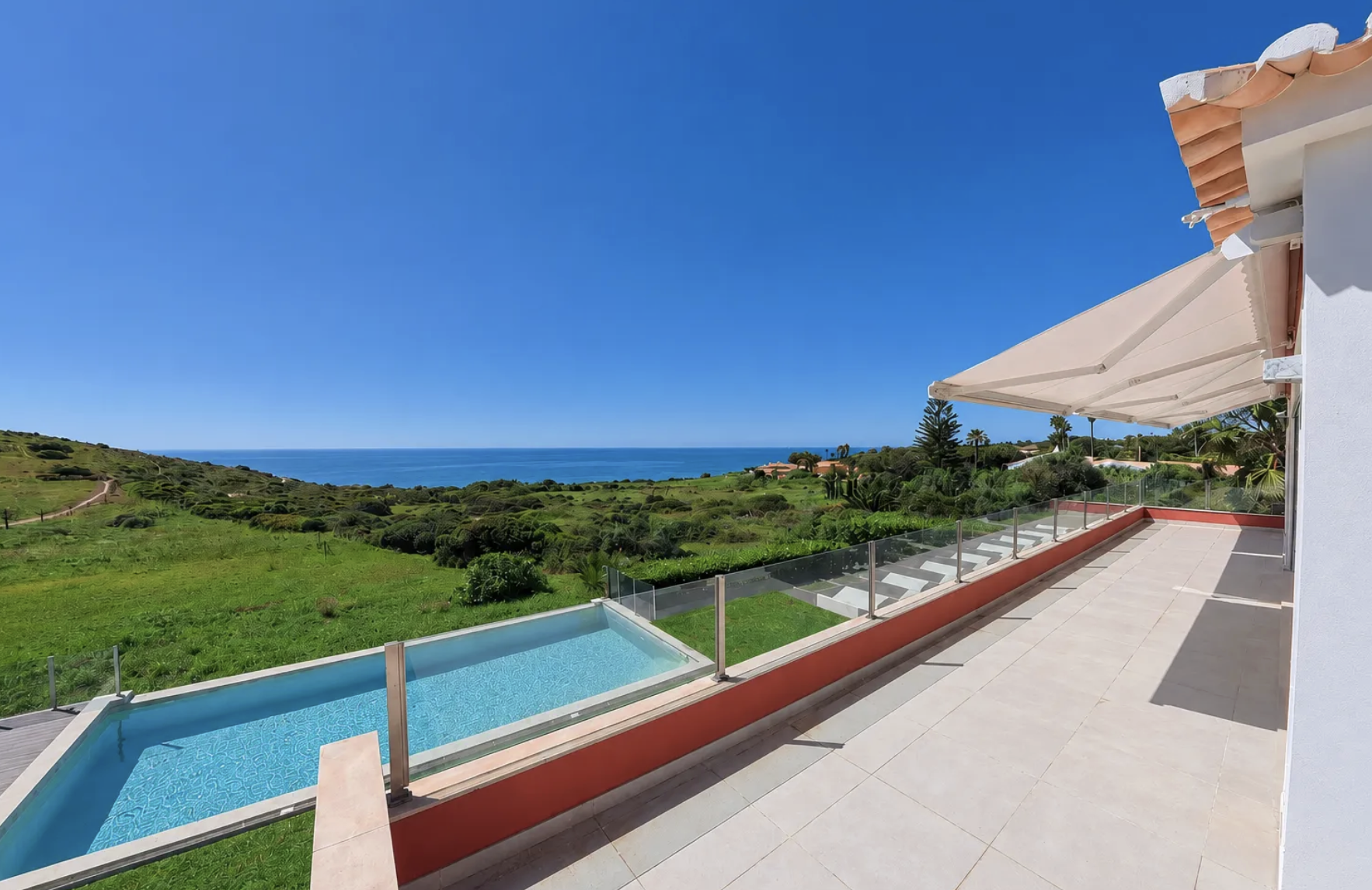
This article provides editorial analysis only. Golden Visa qualifying routes, fund eligibility criteria, minimum investment thresholds, and AIMA processing procedures are subject to legislative and regulatory change. The property shown is a listing example — its purchase does not qualify for Golden Visa purposes. Engage a qualified Portuguese immigration attorney and financial advisor before making any investment or residency decisions. Data as of August 2026.